

How to Price Your Skool Community in 2026 (Plus: When to Upgrade from Hobby to Pro)
Choosing Skool is the easy part.
The harder (and more profitable) question is: what should you charge for your community? Price too low, and you’ll burn out. Price too high, and you’ll struggle to attract members. Price it right, and you build recurring revenue with a loyal member base that stays for months (or years).
Step 0: Understand Your Real Costs (So Your Pricing Isn’t Guesswork)
Before you price your membership, you need to understand the “platform cost” side of the equation.
In 2026, Skool offers two creator plans (priced per community):
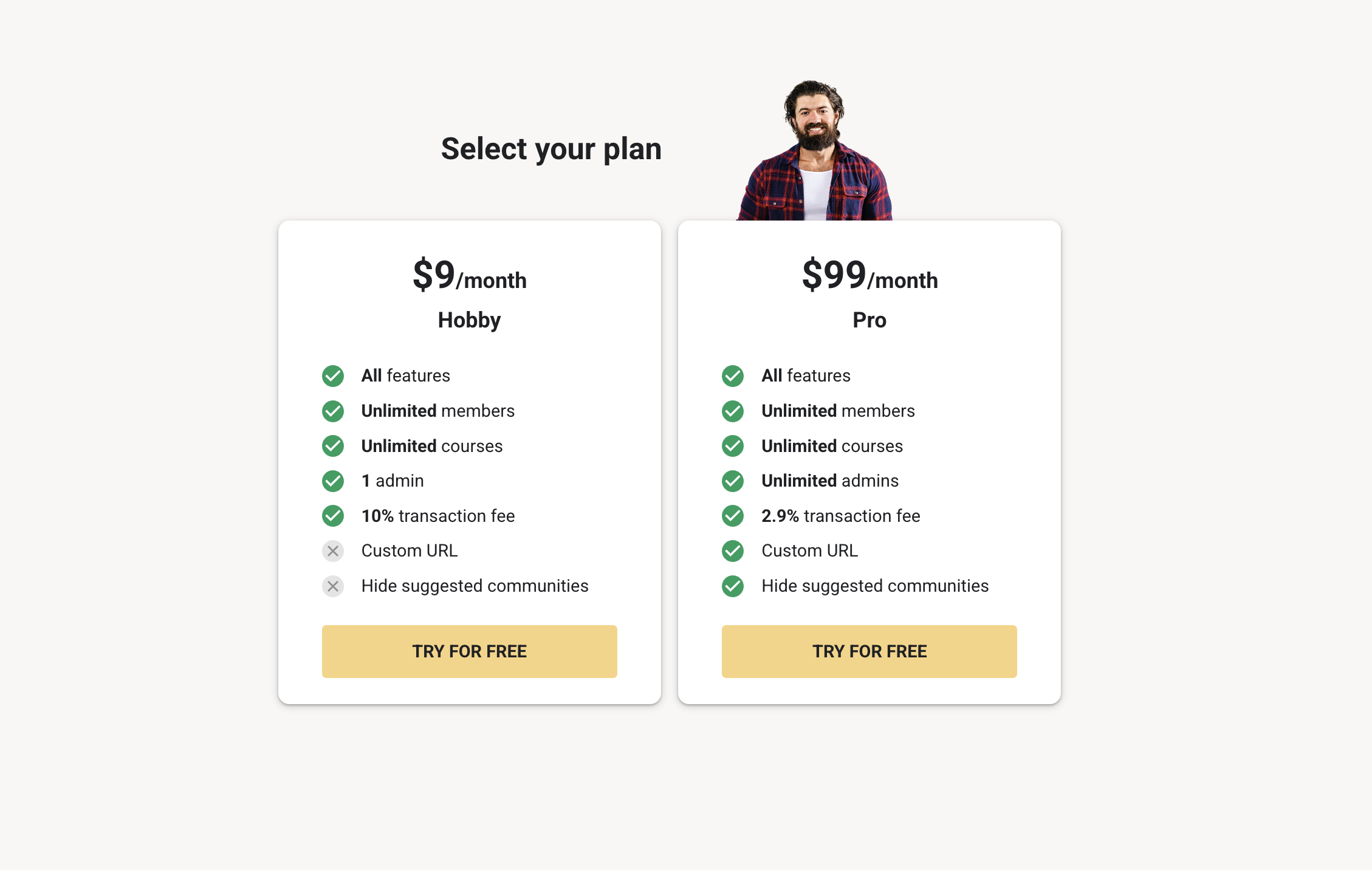
- Hobby: $9/month + higher transaction fees (great for testing)
- Pro: $99/month + lower transaction fees (great for scaling)
Important mindset shift: Skool is your “engine.” Your pricing is your “business model.” Don’t copy someone else’s price—build a price that matches your promise, your audience, and your support level.
Step 1: Define Your Value Proposition (Before You Touch Numbers)
The best pricing strategy starts with clarity. Ask yourself:
- Who is this community for? (Be specific. “Entrepreneurs” is too broad. “B2B copywriters trying to land $3k+ retainers” is usable.)
- What outcome do they want? (Skills, money, accountability, speed, confidence, access, network, transformation.)
- What do they struggle with without you? (Loneliness, lack of feedback, no structure, inconsistent execution.)
- Why you? (Your framework, experience, network, templates, live calls, coaching style, niche expertise.)
When that is clear, pricing becomes easier—because you’re not selling “a community.” You’re selling progress.
Step 2: Choose the Right Pricing Model for Your Offer
Different community goals thrive under different pricing setups. Here are four models that work especially well on Skool:
Model A: Free Community → Paid Upsell
Best when you want to grow fast, build trust, and then convert your most engaged members into paid offers.
- Use it if: you have a larger audience or strong content engine (YouTube, TikTok, newsletter)
- Don’t use it if: you need revenue immediately (free groups can be time-heavy)
Model B: Straight Paid Membership (Monthly or Annual)
This is the most common: people pay monthly for access to the community, resources, and regular touchpoints.
- Use it if: your community offers ongoing value (feedback, accountability, coaching, new content)
- Works best with: a simple weekly rhythm (call + challenge + wins thread)
Model C: Cohort / Challenge-Based Community
Charge a one-time fee for a structured experience (e.g., 4 weeks, 8 weeks). This works great if you deliver a clear transformation quickly.
- Use it if: you want urgency and faster results
- Pro tip: offer an optional ongoing membership after the cohort ends
Model D: Coaching / Mastermind Tiers
If your community includes direct access to you (hot seats, audits, 1:1 time, small groups), tiered pricing makes sense—even if the platform itself stays simple.
- Use it if: your time is scarce and your members want personal support
- Structure idea: Community tier + Coaching tier + Inner circle tier
Step 3: Pick a Price That Your Members Will Say “Yes” to (and You Can Sustain)
Here’s a simple pricing approach that works for most creators:
- Start with what you can consistently deliver (weekly calls, daily prompts, templates, feedback, etc.)
- Price for retention, not hype (a great community is built over months)
- Make it easy to join (one clear offer beats confusing tiers)
| Membership type | Typical offer | Common price range |
|---|---|---|
| Starter | Community + accountability + a monthly call | $15–$49/month |
| Growth | Weekly call + templates/resources + feedback | $49–$149/month |
| Premium | Hot seats + audits + close access + small group support | $199–$999/month |
Reality check: Your goal is not to pick a “perfect price.” Your goal is to pick a price you can confidently deliver on—then improve your offer and adjust over time.
Step 4: Reduce Risk (So People Join Faster)
People hesitate when they’re unsure what they’ll get. Reduce the uncertainty with one (or more) of these:
- Founding member pricing (limited-time “early adopter” rate)
- Clear onboarding (pinned post + “start here” checklist + first win path)
- Simple guarantee (optional, depending on your niche)
- Proof and social momentum (wins threads, testimonials, progress screenshots)
Step 5: Review Pricing Regularly (So You Don’t Leave Money on the Table)
Pricing isn’t a “set and forget.” As your community grows, value increases. Review your pricing every quarter and ask:
- Have we added real value (calls, curriculum, templates, access)?
- Are members getting results faster than before?
- Is retention healthy—or are people churning in the first month?
- Do we need to raise prices for new members (while keeping existing members on their old rate)?
A powerful strategy is to raise prices for new members while keeping current members at their original price (often called “grandfathering”). That rewards loyalty and protects trust.
When Should You Upgrade from Hobby to Pro?
Most creators upgrade when one (or more) of these becomes true:
- You need multiple admins (support, moderation, coaches, team members)
- You want a cleaner brand presence (custom Skool URL + fewer distractions)
- Your revenue makes the fee savings worth it (often around $1.2k–$1.4k/month)
- You want pro growth tools (automation, retention improvements, serious scaling)
Disclosure: This page contains affiliate links. If you sign up through them, we may earn a commission at no extra cost to you.


